Greenland
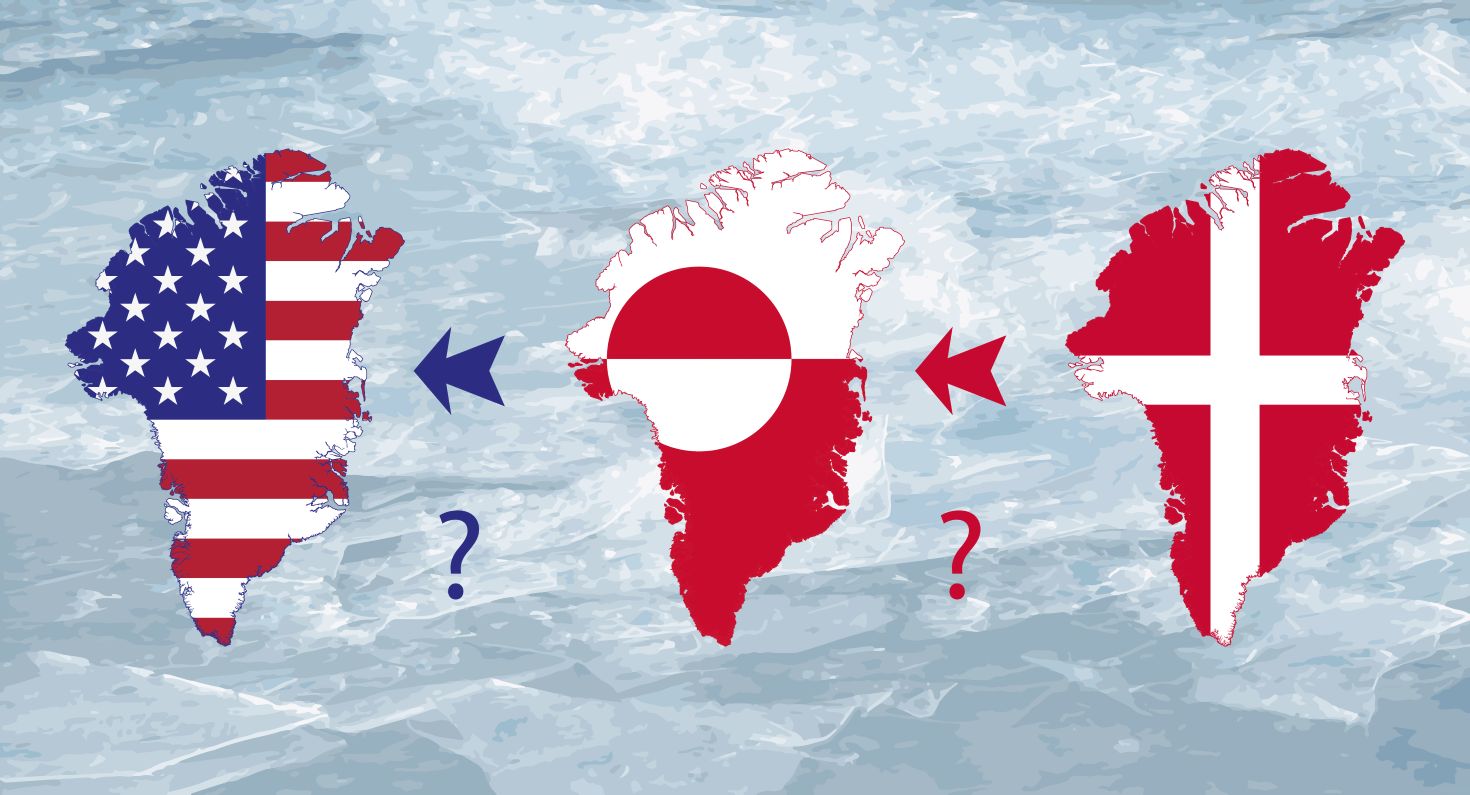
President Trump wants to buy Greenland. Or take it over. Or, if necessary, conquer it by military force. What began as a bizarre statement during his first term has now grown into a serious policy agenda that is putting NATO relations on edge and making investors worldwide nervous. US Secretary of State Marco Rubio recently confirmed that the government wants to buy the island from Denmark. At the same time, the White House refuses to rule out military intervention.
Strategic location and military importance
Greenland is the largest island in the world and is part of the Kingdom of Denmark, although it enjoys substantial autonomy. The island has only 57,000 inhabitants, but it is strategically located between North America and Europe. In the face of rising tensions with Russia and China, this location is becoming increasingly important. Trump claims that the United States needs Greenland for national security. The island is already home to the Pituffik Space Base, an American space base that plays a crucial role in NATO’s missile defence system.
During the Second World War, the United States had more than 15,000 soldiers stationed in Greenland, spread across 10 bases. Since then, that presence has been drastically reduced to less than 200 military personnel. Denmark has repeatedly offered Washington the opportunity to expand that presence, but until recently, interest was lukewarm. Now that geopolitical tensions are rising, that has changed. The melting ice cap is opening new commercial and military shipping routes, which Washington sees as a potential threat if rivals use them.
There is more than just military strategy at stake. Beneath the melting ice lie enormous reserves of rare-earth metals, uranium, and oil. These raw materials are essential for the energy transition and for the production of technologies such as smartphones, electric cars, and wind turbines. Greenland is estimated to hold 10% of the world’s rare-earth metal reserves. In recent years, China has sought to gain a foothold in Greenland through mining investments, a major concern for Washington. The race for Arctic resources has begun, and America does not want to be left on the sidelines.
Trump has spoken openly about the need for American companies to gain better access to the island’s minerals. This aligns with a broader American policy of reducing dependence on Chinese supply chains for critical raw materials. The irony is that Denmark and Greenland have already indicated that they are open to American investment and improved mining rights. But for Trump, that does not seem to be enough. He wants control, not cooperation.
Diplomatic crisis and European reactions
The reactions from Copenhagen and Nuuk are clear: Greenland is not for sale. Danish Prime Minister Mette Frederiksen calls the American rhetoric unacceptable. Greenlandic Prime Minister Jens-Frederik Nielsen speaks of disrespect. Polls show that 85 per cent of Greenlanders do not want to be part of the United States. Only six per cent are in favour. In last year’s elections, Demokraatit, a centre-right party strongly opposed to an American takeover, won.
European leaders have rallied behind Denmark. French Foreign Minister Jean-Noël Barrot stated that Paris is discussing with partners how Europe would respond to American intervention. A group of European government leaders emphasised that security in the Arctic region is a collective NATO task and that only Denmark and Greenland can decide the island’s future. Even Republican Senator Mitch McConnell called the government’s threats inappropriate and counterproductive.
Scenarios for the future
Several scenarios are conceivable. The most obvious is that Denmark will accommodate the United States with extensive military cooperation and improved mining rights, without relinquishing sovereignty. Copenhagen has announced that it will invest $4.2 billion in the defence of the Arctic region, including new ships and aircraft. This is an attempt to show Trump that the current arrangement works and can be improved.
A second scenario revolves around Greenlandic independence. A majority of the population supports independence from Denmark in the long term. Some American officials see this as an opportunity. An independent Greenland could enter into a Compact of Free Association with Washington, similar to the agreements the US has with the Marshall Islands. This would give America exclusive military access in exchange for financial support and protection. The problem is that such an arrangement would cost Greenland hundreds of millions of dollars annually, which are currently paid by Denmark.
The third scenario, military annexation, would be relatively easy to implement given the minimal Danish military presence. But the consequences would be catastrophic. An attack on NATO ally Denmark would effectively end the alliance and destroy the post-war security architecture in Europe. This scenario seems unlikely, but the White House’s refusal to rule it out says a lot about the current state of transatlantic relations.
Consequences for financial markets
For financial markets, this situation creates a new layer of uncertainty. Investors do not like geopolitical tensions, especially when they affect relations within the Western alliance. Although the defence industry in Europe is benefiting from increased military spending, the broader implications for trade and cooperation are worrying. If America is prepared to put pressure on allies for territorial ambitions, what does that mean for other trade relations and treaties?
Companies active in the extraction of rare earth metals see their shares move with every news report from Washington and Copenhagen. The uncertainty about who will ultimately gain access to Greenland’s resources directly affects the valuation of mining companies and their suppliers. At the same time, the situation offers opportunities for investors who believe that the Arctic region will gain in importance in the coming decades.
Minister Rubio will meet his Danish and Greenlandic counterparts in Washington in the coming weeks. The outcome of those talks will determine whether tensions ease or escalate further. Arctic geopolitics is becoming a factor to be considered when assessing risks. The days when Greenland was a distant and forgotten island are behind us.