Operation Epic Fury
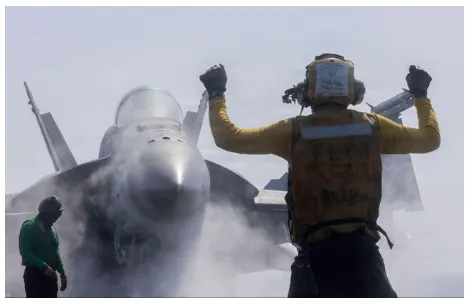
On Saturday morning (Feb 28, 2026), the world woke up to the news that the United States and Israel had launched a large-scale military operation against Iran. Operation Epic Fury is not a surgical strike against a nuclear facility, but a broad-based attack on the heart of the Iranian regime. Dozens of targets were hit, including Ayatollah Khamenei’s compound, Revolutionary Guard command centres and air defence systems. Iranian state television confirmed that Khamenei had been killed. President Trump called on the Iranian people to ‘take back their country’.
‘’Iran is OPEC’s fourth-largest producer’’
It is tempting to compare this moment to the fall of Baghdad in 2003 or the intervention in Libya in 2011, but the scale and ambition are fundamentally different. Whereas previous operations focused on specific military capabilities, the ultimate goal here appears to be explicitly regime change. That is both the most hopeful and the most risky scenario.
Regime change: the best and the most difficult
An Iran without a theocratic regime would be a blessing for the Middle East and the global economy. A secular, pragmatic Iran would stabilise the region, normalise the oil markets and open up a huge domestic market of 90 million people to international trade and investment. The strategic implications are immense.
But regime change from outside is extremely difficult, and history offers few success stories. Iraq shows how a military victory can turn into a decade of chaos. Afghanistan demonstrated that air power alone does not create stable governance. Libya transformed from a dictatorship into a failed state. The pattern is always the same: destroying the existing power structure is easier than building a new one.
The core problem in Iran is that the Revolutionary Guard is not only a military organisation, but an economic empire that is deeply intertwined with Iranian society. This guard controls ports, construction companies, telecommunications and large parts of the oil industry. Even if the political leadership is decapitated, this structure will remain largely intact. The question is not whether the current leaders will survive, but who will succeed them. The regime has sufficient depth to survive the loss of multiple leaders. The only institution strong enough to take over is the army, particularly the Revolutionary Guard.
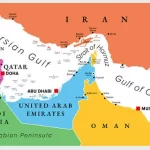
Trump says he will not send ground troops and expects the Iranian people themselves to overthrow the regime. That is an optimistic scenario. The domestic opposition is fragmented and disarmed. The recent protests, impressive as they were, have not led to the critical mass needed for a revolution. The danger is that Iran will end up in a prolonged “survival mode”, a scenario that could last for months or years and in which the Strait of Hormuz becomes the most vulnerable geopolitical pressure point in the world.
Crude oil (West Texas Intermediate, per barrel $)
Press enter or click to view image in full size

The markets: oil, the dollar and risk sentiment
For investors, the immediate impact is clear. The oil price, which closed at around $73 per barrel on Friday, will open significantly higher on Monday. Analysts expect a five to fifteen per cent jump, depending on the passage through the Strait of Hormuz. On Sunday, shipping traffic through the strait was virtually at a standstill. Two ships were hit near the mouth of the strait, insurance premiums skyrocketed, and maritime security advisers advised clients to avoid the strait for at least twenty-four hours.
Iran produces approximately 3.3 million barrels per day, about eleven to twelve per cent of total OPEC production. But the real risk lies not only in Iranian production. Approximately sixteen million barrels of oil flow through the Strait of Hormuz every day — one-fifth of the global supply. OPEC+’s decision to increase production by 206,000 barrels per day in April is a drop in the ocean if the strait becomes blocked.
If Hormuz is completely blocked, prices above $100 per barrel are realistic. Every $ 10-per-barrel increase in oil prices costs 10 to 20 basis points of economic growth over the next twelve months. At $120 per barrel, both the US and global economies would take a significant hit.
The dollar is expected to strengthen — despite active American involvement in the conflict, the greenback remains the ultimate safe-haven currency. Shares will come under pressure on Monday, with a pronounced risk-off sentiment.
LNG price Asia
Press enter or click to view image in full size

Panic is rarely a good advisor
The history of military conflicts and stock markets tells a remarkably consistent story: the initial shock is almost always worse than the ultimate effect.
After the Japanese attack on Pearl Harbor in December 1941, the Dow Jones fell 3.5 per cent on the first trading day, but within a month the losses had been fully recouped. By the end of the Second World War in 1945, the Dow had risen more than 50 per cent from its 1939 level. After Iraq’s invasion of Kuwait in August 1990, the S&P 500 fell by about 10 per cent, only to rise by about 20 per cent in the following year. The invasion of Iraq in March 2003 led to an 8.4 per cent rise in the Dow Jones in the month after the war began, while the S&P 500 rose 26.7 per cent in the first year. Even after Russia’s invasion of Ukraine in February 2022, when European markets fell four per cent on the first day, a strong recovery followed. The S&P 500 has since risen more than sixty per cent.
The MSCI Israel Index has risen by more than 100 per cent since the Hamas attack on 7 October 2023. The MSCI Poland Index rose by 135 per cent since the Russian invasion of Ukraine. These are precisely the markets that investors wanted to stay away from at the time of the shock.
In 73 per cent of all armed conflicts since the Second World War, equities generated positive returns in the year following the first act of aggression. The longer the investment horizon, the greater the chance of a positive outcome. Markets typically decline in the run-up to war, but often recover once the conflict begins. Uncertainty causes more damage than the war itself.
Patience as a strategy
The three factors that make this conflict different from previous skirmishes are the logistical risks surrounding Hormuz, the inflationary pressure from higher oil prices, and China’s position as the largest buyer of Iranian crude oil. More than 84 per cent of the crude oil and condensate that flows through Hormuz is destined for Asian markets, with China, India, Japan and South Korea as the main destinations.
Markets do not like uncertainty, but as soon as the contours of the new normal become apparent, recovery begins. The trick is not to get carried away by the emotion of the moment, but to act on the basis of your own time horizon.