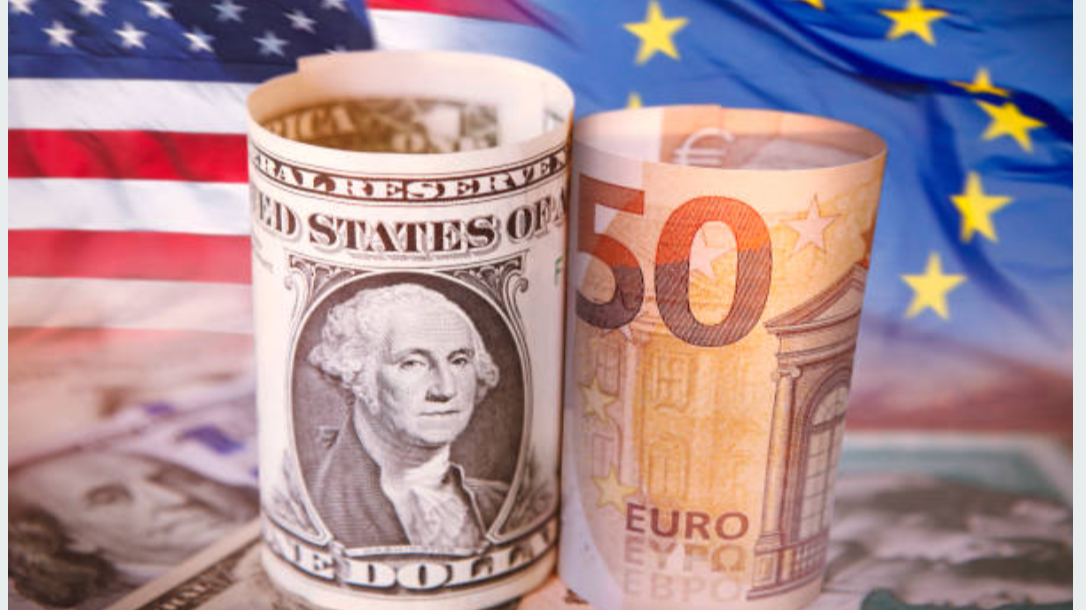
The Dollar’s Unpredictable Path: Navigating Through a Complex Financial Landscape
The dollar’s development depends on many factors, but financial markets do not always assign the same weight to them. Which factor is decisive often only becomes clear in retrospect. Take 2001: virtually all known variables at the time pointed against the dollar (recession, bursting of the dotcom bubble, pressure on US stock markets, eleven interest rate cuts in one year, the 11 September attacks, rising current account deficit), and yet the US currency rose that year. The explanation came later, when it became clear how much the pegging of the Chinese renminbi to the dollar had shifted the balance. China’s accession to the World Trade Organisation gave the Chinese economy a huge boost, and, indirectly, the dollar bloc and the dollar itself. It is a good example of how a factor that was barely on the radar ultimately proved to be decisive.

In recent years, the dollar exchange rate has been driven mainly by interest rate differentials between the United States and other countries. When Trump was re-elected, the markets were initially euphoric about the prospects for American assets, including the dollar. In the first months of last year, no one was talking about hedging the dollar. But that euphoria evaporated in April last year when the announcement of reciprocal import tariffs threw a spanner in the works. The dollar quickly weakened to 1.15 against the euro. Anyone who has hedged their dollar positions since then has gained nothing on balance — the costs of hedging, a direct consequence of that same interest rate differential, have eaten away at the gains.
The question everyone is asking
What will the dollar do? This is perhaps the most frequently asked question among investors. The somewhat bland answer is that the dollar will remain the US currency for years to come — an obvious point, but a relevant one nonetheless. What is striking is that waning confidence in the dollar has led to massive hedging against it over the past year. In a short period, the market has become highlyone-sided, with the vast majority expecting further weakening. Historically, such consensus has often been a harbinger of the opposite. When virtually everyone is short, it only takes a few to change their minds to set an upward movement in motion.
Now, predicting currency movements is notoriously difficult, precisely because markets tend to fixate on one specific factor and ignore others. The twin deficit — the simultaneous trade and budget deficits — is a textbook example of this. For decades, warnings have been issued that this imbalance will undermine the dollar, but so far, there has been no significant impact. The lesson: structural imbalances can persist longer than many analysts believe possible.
This year
Several forces are emerging that could influence the dollar in 2026. In the first half of the year, the likelihood of Federal Reserve interest rate cuts appears low. Inflation is still too high, and political pressure on the Fed is mounting, especially now that the current chairman is being replaced in May. In the second half of the year, the picture could change. It will then be a year since the reciprocal import tariffs were introduced, and provided they are not increased further, they could have a deflationary rather than an inflationary effect. After all, inflation means that rising prices are followed by further price increases. Higher tariffs leave consumers with less spending power and, as in the 1930s, can lead to lower demand and lower prices — a dynamic that few investors are currently factoring in.
There is more at stake. The US elections are scheduled for November. The Republicans will benefit from a strong economy; a recession would reduce their chances of winning a majority. And ultimately, a strong economy usually goes hand in hand with a strong currency. In addition, US productivity growth is currently impressive, even without additional stimulus measures. This could provide scope for interest rate cuts, reducing interest rate differentials with other countries. In theory, this would put pressure on the dollar, but higher economic growth has the opposite effect. The net effect depends on which market factor carries the most weight at that moment.
Moreover, it matters how many expectations have already been priced in. The consensus seems to be wrongly counting on inflation rather than deflation. At the same time, the impact of artificial intelligence on the US economy, in particular, is consistently underestimated. The productivity gains that AI can deliver are potentially transformative, but they are hardly reflected in share prices.
Geopolitical reality
Then there are the geopolitical factors. The debate about de-dollarisation seems to have peaked. However understandable the desire to move away from the dollar may be, there is, in fact, no alternative for large currency positions. The eurozone, with its 27 jurisdictions and the scars of the euro crisis, does not offer the unity and depth that institutional investors seek. And as long as the Chinese renminbi is not freely tradable, it remains a non- serious alternative to the deep, liquid US financial markets. The dollar owes its position not only to economic strength, but also to the lack of a credible competitor.
The current US administration may be challenging institutions that have been considered sacrosanct for decades, but there is a real chance that either the US courts or the US electorate will temper this administration’s ambitions in that area. The checks and balances may be under pressure, but they have not yet disappeared.
The balance
Although virtually everyone is counting on a weakening of the dollar, paradoxically, much of that expected weakening is already priced in. Meanwhile, capital flows towards US assets continue to increase rather than decrease. Monetary and fiscal policy could theoretically weaken the dollar in the second half of the year, but if the American economy and stock market perform strongly, this usually goes hand in hand with a strong currency. The dollar remains what it has been for decades: serially monogamous — faithful to changing factors, but ultimately always to itself. It will remain the American currency for years to come.